
Research areas
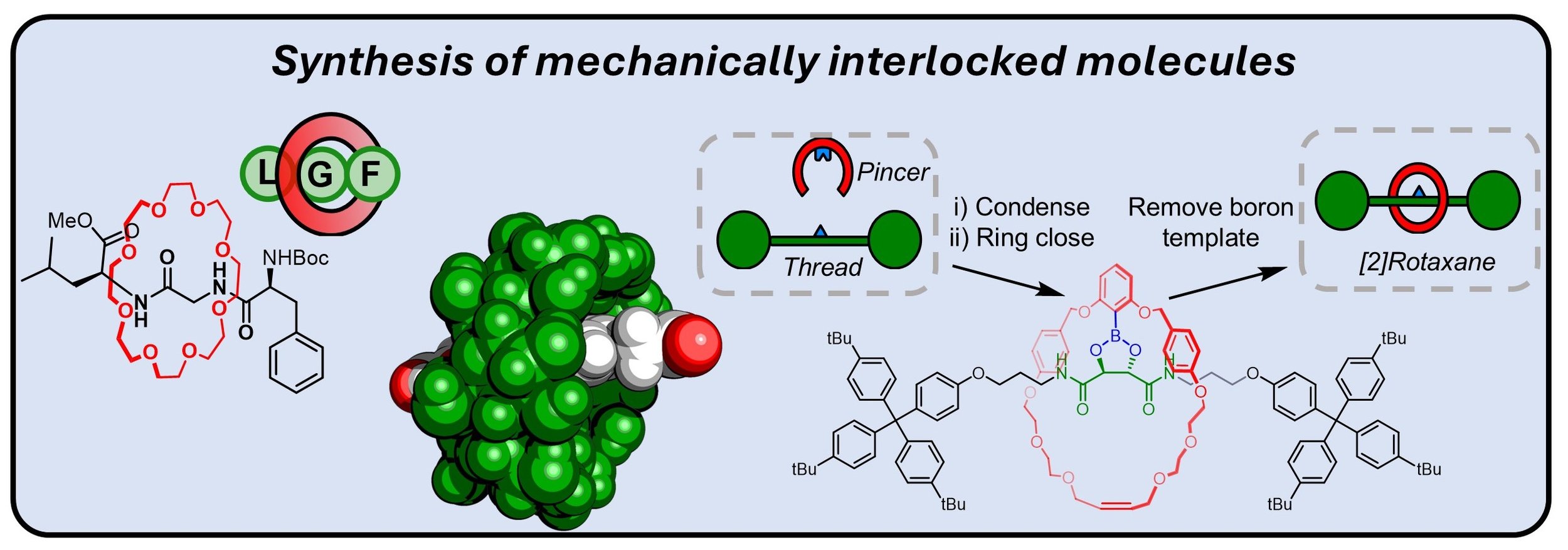
Biocompatible Mechanically Interlocked Molecules
Mechanically interlocked molecules are highly useful functional units which are used in sensing, catalysis, energy storage and advanced functional materials, among many other applications. We are interested in using the mechanical bond to address challenges related to global health, but to do that we need new and improved methods for making biocompatible interlocked molecules. We use organic synthesis guided by supramolecular and physical organic chemistry to develop new types of mechanical bonds. An active area for the group is to use the mechanical bond to protect sensitive functionality for degradation in the body, and we are actively working on new ways to install and remove mechanical bonds to optimise these protocols.
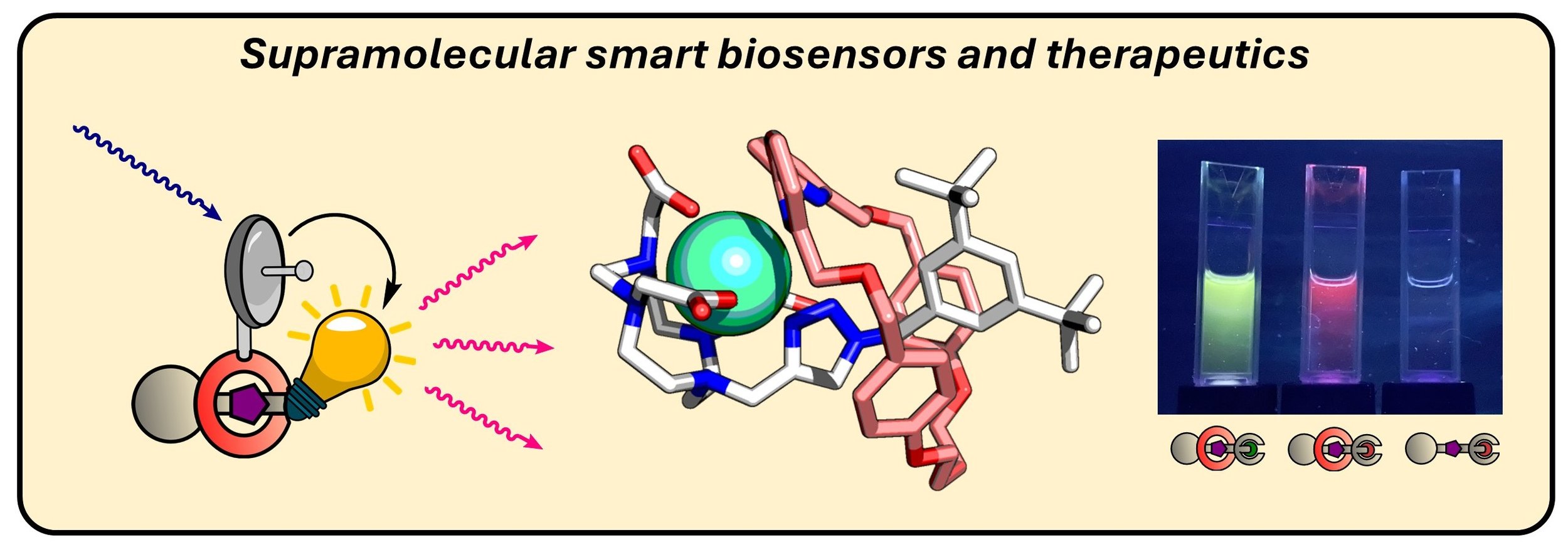
Interlocked Molecules as Biosensors and Therapeutics
Our group use mechanically interlocked molecules for biological applications, for example in diagnostic devices or for therapeutic purposes. For example, we are making mechanically interlocked biosensors with lanthanide luminescence and interlocked radioimaging agents. Here, our goal is that the mechanical bond should improve pharmacokinetic properties of the functional compound or give it new and useful functional properties. Many mechanically interlocked molecules also act as artificial molecular machines when exposed to the right stimuli, and one area we are particularly interested in is using this machine-like movement in our molecules to create and deliver “smart” drugs.
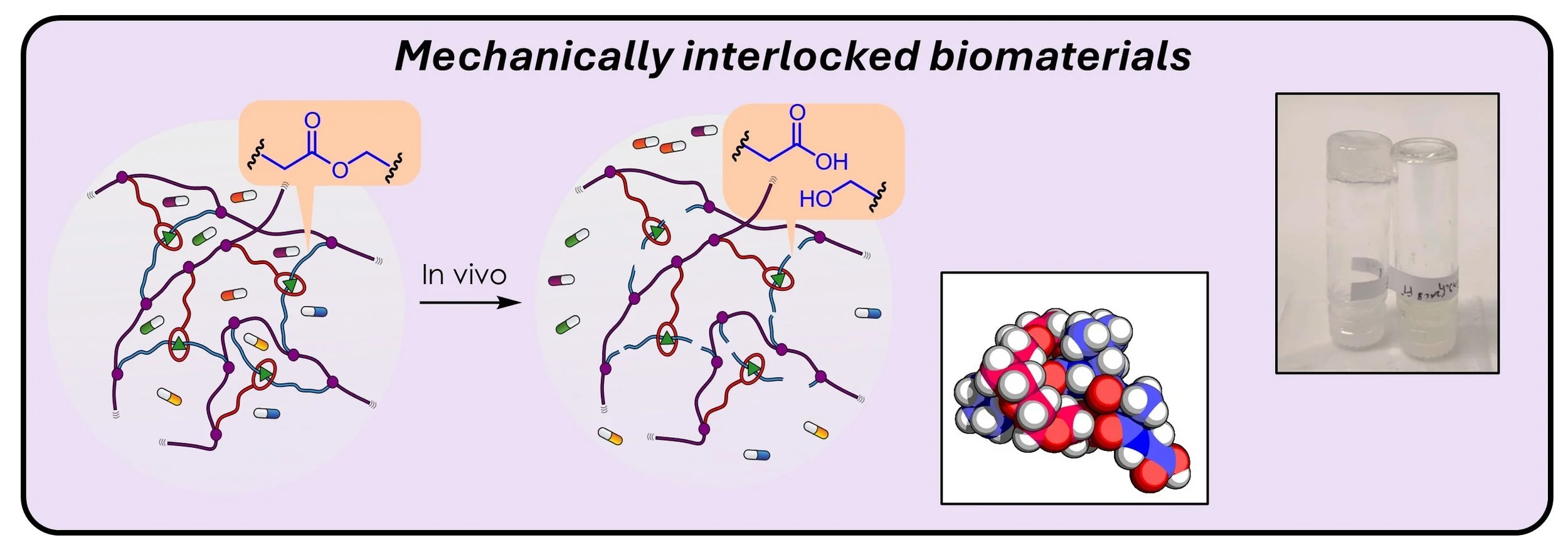
Mechanically Interlocked Biomaterials
We use the mechanical bond to develop next-generation biomaterials. Projects in this area deals with synthesis of linear or crosslinked polymers with threaded rings, so-called polyrotaxanes. We develop new ways to make these macromolecules, study their properties and apply them in drug delivery and regenerative medicine applications.